NEW FORMULAS + EXCLUSIVE LAUNCH OFFER: Buy 3 products → GET 1 FREE + FREE shipping!

NEW FORMULAS + EXCLUSIVE LAUNCH OFFER: Buy 3 products → GET 1 FREE + FREE shipping!


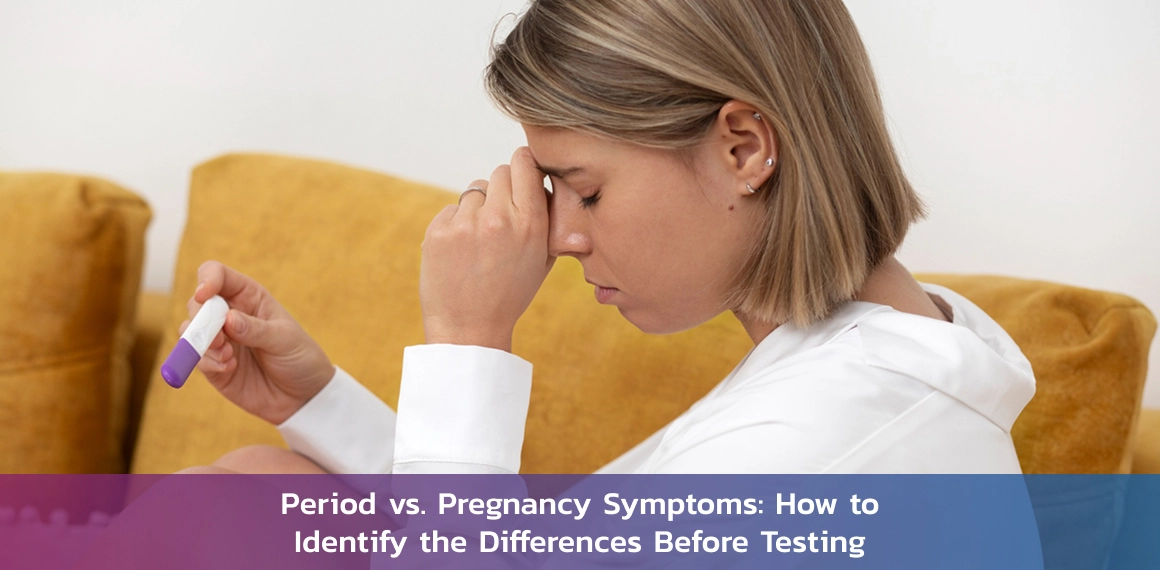
Cramps, bloating, breast tenderness, fatigue, mood swings, when these symptoms show up, it’s completely natural to start questioning period vs pregnancy symptoms, especially in the days leading up to a missed cycle.
Many women closely observe every change, trying to figure out how to tell period or a pregnancy before reaching for a test.
The confusion happens because PMS and early pregnancy are influenced by very similar hormonal shifts. Rising progesterone affects energy levels, digestion, emotions, and even sleep, which is why period or pregnant symptoms often feel almost the same at first.
At Plusbaby, we believe that understanding your body should bring reassurance, not stress.
This guide is designed to gently explain the differences, help you listen to your body with clarity, and feel more confident while waiting for answers.
The main reason PMS vs. pregnancy symptoms feel so similar is hormonal activity. After ovulation, progesterone rises in the body to prepare for a possible pregnancy. If pregnancy does not happen, progesterone levels fall, leading to PMS symptoms and the start of a period. If pregnancy does occur, progesterone continues to rise, and a new hormone called hCG begins to increase.
These hormonal changes influence digestion, mood, energy levels, and breast sensitivity. That’s why PMS vs. early pregnancy symptoms often feel almost identical in the beginning. Without time or testing, it can be difficult to rely on symptoms alone to clearly tell the difference.
Hormonal differences at a glance
| Factor | PMS (Before period) | Early pregnancy |
| Progesterone | Rises, then drops | Continues to rise |
| hCG hormone | Not present | Begins increasing |
| Mood changes | Irritability, mood swings | Emotional sensitivity |
| Energy levels | Mild fatigue | Ongoing fatigue |
| Breast changes | Tender before period | Fuller, more sensitive |
| Digestive impact | Bloating, cravings | Bloating, possible nausea |
Understanding these patterns explains why period vs pregnancy symptoms can feel confusing at first. As hormones continue to shift, subtle differences usually become clearer with time and careful observation.
For women looking to improve hormonal balance naturally, this one-month fertility boost plan using Myo-Inositol and Maca offers a gentle starting point.
Early period symptoms, commonly known as PMS, usually begin 5–10 days before menstruation as progesterone levels rise and then start to fall. These symptoms follow a familiar pattern for many women and tend to feel consistent from cycle to cycle.
Tracking your menstrual cycle can help you recognize when these changes differ from your typical premenstrual patterns.
Common early period symptoms include:
When considering a missed period pregnancy or pms, the pattern matters. PMS symptoms usually peak just before menstruation and then fade quickly. If symptoms feel predictable and resolve once your period arrives, they are more likely related to PMS.
Early pregnancy symptoms may begin subtly and can feel unfamiliar compared to your usual PMS. These changes are caused by sustained progesterone levels and the early rise of hCG, which continues to influence the body day by day.
Early pregnancy symptoms may include:
This overlap explains why period vs pregnancy symptoms can feel confusing in the early days. Unlike PMS, pregnancy symptoms often persist or intensify gradually instead of disappearing, offering subtle clues before a missed period or test.
If you prefer a holistic approach, this Lausanne women’s guide to preparing your body for pregnancy naturally shares practical lifestyle steps.
When symptoms overlap, noticing small but consistent differences can help clarify how to tell period or a pregnancy. While no single symptom can confirm pregnancy on its own, patterns related to intensity, timing, and progression often provide useful clues.
Below is a simple comparison to help distinguish common period vs pregnancy symptoms before testing.
Key symptom differences
| Symptom | Period (PMS) | Early pregnancy |
| Cramping | Period cramps vs pregnancy cramps are usually stronger, rhythmic, and centered in the lower abdomen | Cramps are lighter, dull, or stretching, often short-lived |
| Breast changes | Breast tenderness period vs pregnancy feels sore or heavy but improves once bleeding starts | Tenderness feels deeper, fuller, and increases over time |
| Energy levels | The fatigue period vs pregnancy is mild to moderate and improves with rest | Fatigue is more persistent and may feel overwhelming |
| Digestion & bloating | Bloating during the period or pregnancy is common, but usually settles after the period begins | Bloating may linger longer and feel more constant |
| Mood changes | Mood swings, PMS vs. pregnancy, are short-lived and linked to hormonal drops | Emotions may feel heightened or unpredictable |
| Nausea | Nausea during pregnancy is uncommon and mild | Nausea or food aversions may appear and persist |
Understanding pms vs pregnancy symptoms often comes down to progression. PMS-related symptoms tend to peak and then disappear quickly, while pregnancy symptoms usually continue or intensify over several days. Paying attention to how your body responds over time can offer reassurance while waiting to test.
Bleeding can be one of the most stressful signs when trying to understand period vs pregnancy symptoms. Even light spotting can raise questions, especially if it appears earlier or looks different than your usual cycle. Because early pregnancy and the start of a period can both involve bleeding, paying attention to small details becomes important.
Implantation bleeding vs period happens when a fertilized egg attaches to the uterine lining, usually around 6–12 days after ovulation. This type of bleeding is typically very light and may show up as a few spots rather than continuous flow. The color is often pink or brown, and it does not gradually become heavier like a period.
Understanding period vs pregnancy spotting also means noticing how your body feels alongside the bleeding. Spotting during early pregnancy is usually not accompanied by strong cramps or clots. In contrast, menstrual bleeding tends to follow a familiar pattern, starting light, becoming heavier, and lasting several days.
Bleeding comparison overview
| Feature | Period bleeding | Implantation / early pregnancy bleeding |
| Color | Bright red to dark red | Light pink or brown |
| Flow | Increases over time | Very light, does not increase |
| Duration | 3–7 days | A few hours to 2 days |
| Clots | May be present | Absent |
| Cramping | Moderate to strong | Mild or none |
| Pattern | Predictable, cyclical | Irregular, short-lived |
Understanding bleeding during pregnancy vs period can help reduce unnecessary worry. If bleeding stays light, does not intensify, and looks different from your usual period, it may be early pregnancy-related rather than a menstrual cycle.
Although PMS and early pregnancy share many signs, certain symptoms are less typical of PMS and may lean more toward pregnancy, especially when they appear together or persist over time. Paying attention to how long symptoms last and how they change can help you better understand period or pregnancy symptoms before testing.
Symptoms that may suggest pregnancy include:
All these symptoms often progress gradually instead of disappearing. When changes continue or intensify rather than resolving, they provide clearer clues in distinguishing period vs pregnancy symptoms over time, and many of these changes become easier to understand when you follow how symptoms and fetal growth develop during pregnancy week by week.
If you’re actively trying to conceive, this guide on how to get pregnant quickly and safely explores practical solutions.
Some symptoms are shared so closely between PMS and early pregnancy that they cannot confirm anything on their own. These overlapping signs are the main reason PMS vs. pregnancy symptoms often feel confusing and emotionally draining.
Common symptoms seen in both periods and pregnancy include:
Because these symptoms overlap so closely, period or pregnancy symptoms should always be viewed as patterns, not isolated signs. Observing how symptoms change, persist, or resolve over time provides far more clarity than focusing on any single symptom alone.
Understanding how supplements support hormones is explained in this guide on fertility-enhancing dietary supplements.
When symptoms continue and your period does not arrive as expected, taking a pregnancy test can provide clarity. For many women questioning missed period pregnancy or pms, timing plays a major role in getting reliable results.
Home pregnancy tests work by detecting the hormone hCG, which takes time to build up in the body. For the most accurate outcome, testing 5–7 days after a missed period is usually recommended. Testing at this point allows hCG levels to rise enough to be detected, reducing uncertainty.
Testing too early can lead to false negatives, even if pregnancy has begun. This often adds unnecessary stress when trying to interpret period vs pregnancy symptoms. If an early test is negative but symptoms persist, waiting a few more days and testing again can provide clearer answers and peace of mind.
If you’re planning to conceive, following a healthy pregnancy diet plan can help nourish your body and support a safe and balanced pregnancy journey.
If you’re feeling unsure about testing too soon, this pregnancy test calculator can help you determine the best time for accurate results and reduce unnecessary stress.
Your body communicates in subtle ways, but it doesn’t always give instant answers. When symptoms overlap, it’s easy to overanalyze every change, especially when navigating PMS vs. pregnancy symptoms or waiting through an uncertain cycle. Instead of panic-googling each sign, allow yourself time to notice patterns, progression, and what feels different from your usual rhythm.
Whether you’re facing confusion around a missed period or simply learning how your hormones affect you, patience often brings clarity. Supporting your body during this phase matters too. At Plusbaby, we believe in gentle, informed care, where balanced nutrition and thoughtfully formulated fertility supplements for women can help support hormonal health, energy levels, and overall well-being during every stage of the journey.
You’re not imagining these signals. You’re paying attention. And listening to your body with calm awareness is one of the most powerful steps toward confidence, clarity, and self-trust.
Q1. How do you tell if your period is coming or you are pregnant?
Answer: It can be hard to tell at first because period vs pregnancy symptoms often overlap. PMS symptoms usually follow a familiar pattern and ease once bleeding begins. Pregnancy symptoms tend to persist or slowly intensify, such as ongoing fatigue, nausea, or breast sensitivity. Watching how symptoms change over several days is more helpful than focusing on one sign.
Q2. How to tell the difference between menstrual and early pregnancy cramping?
Answer: When comparing period cramps vs pregnancy cramps, menstrual cramps are usually stronger, rhythmic, and followed by bleeding. Early pregnancy cramps are milder, may feel like stretching or pulling, and often occur without bleeding. Cramping that does not lead to a period may lean more toward pregnancy.
Q3. What does a period feel like if you’re pregnant?
Answer: If you are pregnant, you do not have a true period. Some women experience light spotting, which can be mistaken for a period. Unlike normal menstruation, bleeding during pregnancy vs period is lighter, shorter, and does not become heavier over time.
Q4. At what period do pregnancy signs start showing?
Answer: Pregnancy signs can start showing as early as 6–12 days after ovulation, sometimes even before a missed period. Early symptoms may include fatigue, breast tenderness, mild nausea, or heightened smell, which is why many women question a missed period pregnancy or PMS before testing.