10% off for life with subscription + Free Shipping 


10% off for life with subscription + Free Shipping


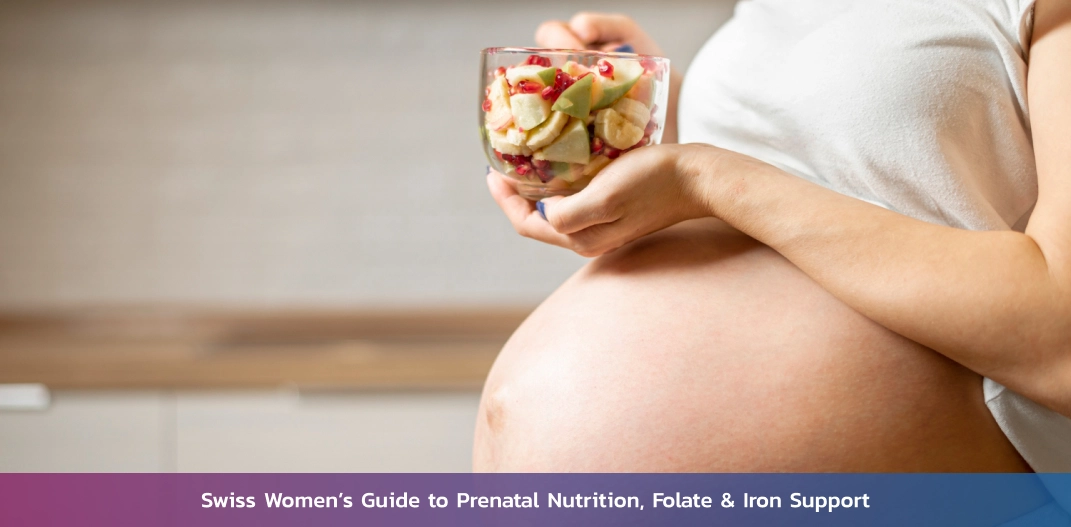
Pregnancy changes what your body needs, and getting the basics right early matters.
If you’re looking for a clear pregnancy nutrition guide Switzerland mothers can trust, this is it.
As Switzerland’s Swiss Vegan Fertility Leader, Plusbaby put this guide together to make Swiss prenatal nutrition simple- just what you need to know about folate, iron, and everything in between.
The Swiss Federal Office of Public Health (BAG) and gynécologie suisse (SGGG) align closely with WHO recommendations, with Switzerland-specific notes around vitamin D given our limited winter sunlight.
The global evidence base for iron and folic acid comes from the WHO’s clinical guideline, recommending daily oral iron and folic acid supplementation for all pregnant women as standard antenatal care: WHO — Daily Iron and Folic Acid Supplementation in Pregnant Women.
Closer to home, a Swiss-specific study in Nutrients found real cause for concern: 91.8% of non-pregnant women and 52% of pregnant women had folate levels below the threshold protective against neural tube defects, with the first trimester the highest-risk window.
Only 38% of Swiss mothers started folic acid at least four weeks before conception, as recommended. Full study: Inadequate Status and Low Awareness of Folate in Switzerland.
| Nutrient | Daily Recommendation (Pregnancy) | Swiss/WHO Source |
|---|---|---|
| Folic acid/folate | 400–800 mcg | BAG, WHO antenatal guidelines |
| Iron | 27–30 mg (higher if deficient) | BAG, WHO |
| Vitamin D3 | 600–800 IU (often higher in winter) | BAG |
| Iodine | 200–250 mcg | SGGG |
| Omega-3 (DHA) | 200–300 mg | WHO |
This table is a useful starting point for any prenatal supplement guide, but always confirm your personal targets with your gynaecologist or midwife, especially if bloodwork shows a deficiency.
You can also view the official Swiss recommendations from the Swiss Society for Nutrition (SGE), published jointly with the Federal Food Safety and Veterinary Office (BLV): SGE/BLV — Nutrition During Pregnancy and Breastfeeding (PDF).
Folate is a B-vitamin your baby’s neural tube depends on in the first 28 days of pregnancy, often before you know you’re pregnant. This is why folic acid before pregnancy matters as much as folic acid during it.
One nuance many Swiss women aren’t told: standard folic acid needs converting by your body into its active form before use.
Some women, particularly those with an MTHFR gene variant, convert it less efficiently, which is why many Swiss prenatal formulas now use Quatrefolic®, an active, ready-to-use folate that skips that conversion step.
Practical tips for folic acid during pregnancy:
Before conception, it’s also important to understand the essential vitamins and minerals every woman needs before conception, not just folate alone.
Blood volume increases up to 50% during pregnancy, and iron needs rise with it. Left unaddressed, iron deficiency in pregnancy can lead to fatigue, dizziness, and, in serious cases, complications for mother and baby.
Not all iron supplements are equal. Standard ferrous sulfate is cheap but notorious for nausea and constipation. Iron bisglycinate, a gentler chelated form, is increasingly preferred for iron support in pregnancy since it’s absorbed efficiently at a lower dose with far less stomach upset.
| Iron Form | Typical Dose | Common Side Effects | Best For |
|---|---|---|---|
| Ferrous sulfate | 50–105 mg | Nausea, constipation | Confirmed severe deficiency |
| Iron bisglycinate | 18–25 mg | Minimal | Everyday iron support in pregnancy |
Pair iron-rich foods (red meat, lentils, spinach) with vitamin C (citrus, peppers) to boost absorption, and avoid coffee or tea around mealtimes, as they block iron uptake.
Ready to Act?
You don’t need to overhaul your diet overnight. The simplest first step in any prenatal nutrition Switzerland plan is one high-quality, well-absorbed supplement covering folate and iron together.
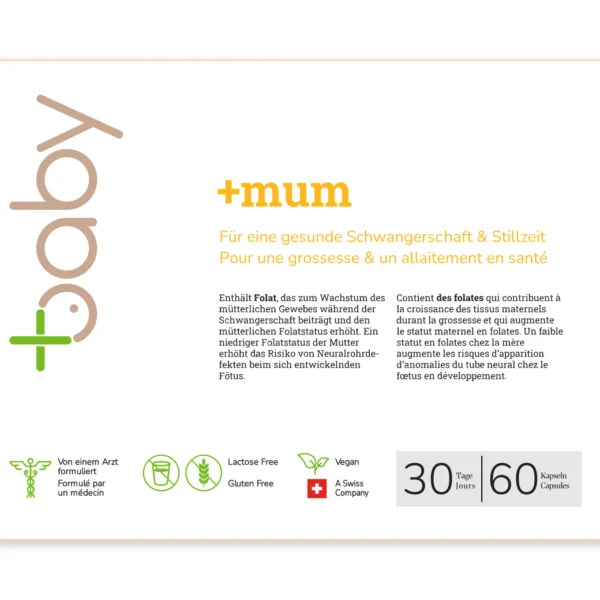
👉 Explore Plusbaby’s +mum formula, designed with active folate and gentle iron bisglycinate for Swiss mothers.
See the +mum range →
If you’re comparing supplement options, our guide to the best vegan prenatal vitamins for pregnancy and breastfeeding can help you choose a complete prenatal formula.
Folate and iron get the spotlight, but a complete nutrition for pregnant women Switzerland plan also includes:
“In my practice, I see the same pattern every week,” says a Swiss-based gynaecologist (FMH Obstetrics & Gynaecology). “Women who eat well still show low ferritin or borderline folate by the second trimester, because pregnancy’s demands outpace what even a healthy diet can supply. Start folic acid before you try to conceive, get bloodwork every trimester, and don’t wait for symptoms like fatigue to act on iron. By the time you feel it, the deficiency is usually already significant.”
This is echoed across Swiss maternity care: gynaecologists routinely order ferritin and folate panels at the first visit, since deficiencies are common even among health-conscious women.
Laura, 32, Geneva: “I switched to a gentler iron formula after standard tablets left me nauseous on top of morning sickness. First supplement I actually managed to take every day.”
Sarah, 28, Zurich: “My gynaecologist told me my ferritin was low at 20 weeks, even though I thought I ate enough iron-rich food. That was my wake-up call.”
A balanced approach to pregnancy supplements in Switzerland starts with food, then closes the gaps diet can’t reach. Here’s how the two work together:
| Food-First Choices | Smart Supplement Checklist |
| Lentil and spinach stew (folate + iron) | Active folate, e.g. Quatrefolic® — no conversion needed |
| Oatmeal with fortified milk (iodine + calcium) | Gentle iron form, e.g. bisglycinate — fewer digestive side effects |
| Spinach-and-egg breakfast with citrus (iron + vitamin C for absorption) | Clearly labelled, minimal-filler ingredients |
| Fatty fish or walnuts 1–2×/week (omega-3 DHA) | Covers folate, iron, D3, and omega-3 in one product |
Neither column replaces the other; a well-planned diet lowers how much you need from a supplement, but pregnancy’s demands rarely stop there, which is why most prenatal supplement guide recommendations pair both.
Plusbaby’s +mum formula was built around the science above, and reflects the broader shift among pregnancy supplements Switzerland brands toward gentler, more bioavailable ingredients.
Instead of standard folic acid, it uses Quatrefolic®, the active, body-ready folate that skips your own conversion process, a real advantage for women who process synthetic folic acid poorly.
For iron support in pregnancy, +mum uses gentle iron bisglycinate rather than harsh ferrous sulfate, giving effective absorption without the nausea or constipation that make many women quietly stop taking their supplements.
Beyond folate and iron, the formula rounds out the nutrients covered above: vitamin D3 for Switzerland’s shorter winter days, omega-3 DHA for brain development, iodine, and choline, in one clean, Swiss-formulated capsule instead of five bottles.
As the Swiss Vegan Fertility Leader, Plusbaby also formulates without animal-derived ingredients, making +mum suitable for vegetarian and vegan mothers who often face the highest risk of nutrient gaps- a trustworthy answer to “which prenatal vitamins Switzerland should I actually take?”
Question: How much folic acid should I take daily in Switzerland?
Answer: Most guidelines recommend 400 mcg starting before conception, up to 800 mcg for higher-risk pregnancies; confirm with your doctor.
Question: Can I get enough iron from food alone?
Answer: Possible but difficult, especially in the second and third trimesters. Many Swiss women need supplementation alongside diet.
Question: Is active folate better than regular folic acid?
Answer: For women who convert folic acid less efficiently, an active form is easier for the body to use immediately.
Question: When should I start taking prenatal vitamins?
Answer: Ideally before conception, or as soon as you find out you’re pregnant. For a complete timeline, see our guide on when to start fertility supplements before trying to conceive, including what to take several months before pregnancy.
Question: What’s the difference between iron bisglycinate and standard iron supplements?
Answer: Iron bisglycinate is a gentler, chelated form absorbed efficiently at a lower dose, causing far less nausea and constipation than ferrous sulfate, and easier to take consistently.
This article is for general information only and does not replace personalised medical advice. Always consult your gynaecologist or midwife before starting any supplement.