10% off for life with subscription + Free Shipping 


10% off for life with subscription + Free Shipping


Elena from Zurich bought what appeared to be high-quality maca powder online. It arrived quickly with professional packaging, but had almost no natural aroma or taste — and delivered no noticeable benefits. It turned out to be heavily diluted.
Her experience is increasingly common as interest in maca rises across Switzerland.
At Plusbaby, a Swiss Vegan Fertility Leader, we believe in full transparency. Here’s exactly how to avoid fake maca powder and choose the best organic maca in Switzerland.
Real maca (Lepidium meyenii) grows only at extreme altitudes in the Peruvian Andes, between 3,500 and 4,500 metres. This harsh environment is exactly why the root is so nutrient-dense, and exactly why it’s hard to fake without cutting corners.
There are three main types: yellow, red, and black maca, each with slightly different traditional uses.
But regardless of colour, authentic organic Peruvian maca must meet two standards: it must genuinely come from Peru, and it must be certified organic.
Many products claim one without the other, which is the first thing to watch for during any Peruvian maca quality check.
Not sure which variety is best for your fertility goals? Read our guide on red vs black maca for fertility to understand the unique benefits of each type before choosing the right supplement.
Like Elena, many Swiss consumers unknowingly buy diluted or mislabeled maca. Common issues include
These problems aren’t always obvious. Packaging can look professional, a nice jar or a sleek capsule bottle, and still contain only a fraction of the real ingredient, which is exactly why learning to verify real maca powder yourself is so important, rather than trusting the label alone.
Whether you’re buying loose maca powder or maca capsules, the checks are the same; you’re really just verifying what’s inside.
Here’s a simple, practical maca powder buyer guide you can use before every purchase:
| Verification Step | What to Look For |
|---|---|
| 1. Organic certification | EU Bio, Swiss Bio, or USDA Organic logo on the label |
| 2. Country-of-origin labeling | Clear statement: “Origin: Peru” — not just “Peruvian-style” |
| 3. Lab testing / Certificate of Analysis | Third-party CoA confirming purity and no contaminants |
| 4. Manufacturing certification | GMP and ISO certified production facility |
| 5. Ingredient list | Should say ” maca root” per capsule, no starch, flour, or “blend” fillers |
| 6. Dosage transparency | Exact mg of maca per capsule stated clearly, not hidden behind “proprietary blend” |
| 7. Sourcing transparency | Brand discloses where and how the maca is grown |
Following this checklist is the fastest way to confirm premium maca powder Switzerland shoppers can actually trust, whether it comes in a jar or a capsule, before you spend a single franc.
Once you know how to verify authentic maca, the next step is buying from trusted retailers. Explore our guide on where to buy quality maca supplements in Switzerland, including recommendations for Lausanne and Bern.
If you see any of these warning signs, walk away:
Switzerland has clear expectations for food supplements. The Federal Office of Public Health (FOPH) requires accurate labeling, safe manufacturing practices, and traceable ingredient sourcing.
On top of this, GMP (Good Manufacturing Practice) and ISO certifications add another layer of accountability, ensuring consistency from batch to batch.
| Standard | What It Guarantees |
|---|---|
| FOPH compliance | Accurate labeling and safe supplement composition |
| GMP certification | Controlled, hygienic manufacturing process |
| ISO certification | Consistent quality management across every batch |
| Organic certification (EU/Swiss Bio) | Verified pesticide-free, organic farming practices |
When a brand holds all of these, it’s a strong signal of genuine maca powder certification, not just a marketing claim.
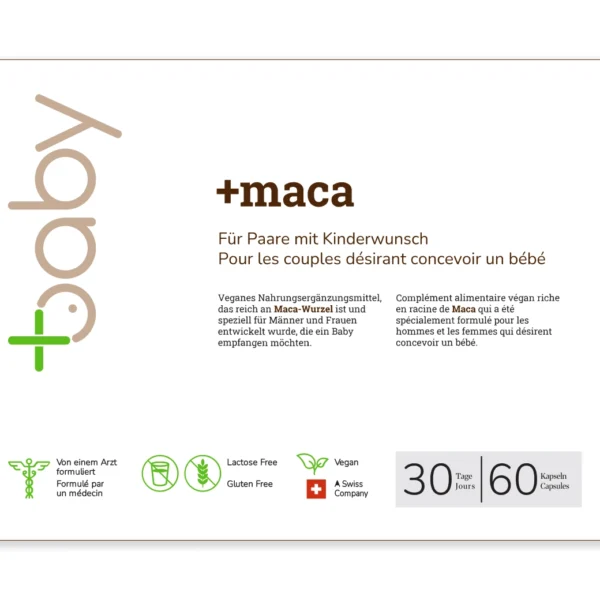
Here’s a quick test: ask any maca brand to name exactly what’s inside a single capsule. Most can’t. Ours can: 450 mg of maca root (Lepidium meyenii, origin: Peru), housed in a plant-based capsule.
That’s the entire ingredient list. No starch, no flour, no “proprietary blend” hiding a lower dose behind a vague label.
As a Swiss Vegan Fertility Leader, Plusbaby doesn’t outsource trust to a logo; our +maca is formulated with fertility specialists, produced in a GMP-certified facility, and built to be checked, not just believed.
It’s non-GMO, allergen-free, and skips the artificial colours and preservatives that low-quality batches often use to mask poor sourcing.
In a market where “Peruvian” is often just a word on a label, we’d rather it be a fact you can verify.
Skip the guesswork — see exactly what’s inside +maca before you buy.
Looking for a trusted product after learning how to verify authenticity? Discover our guide to the best Peruvian maca capsules in Switzerland and what makes a high-quality supplement worth choosing.
Dr. A. Fischer-Stoca, FMH Specialist in Obstetrics and Gynaecological Surgery, notes that sourcing and purity directly influence how well maca supports fertility and hormonal health.
Genuine reviews are one of the clearest signals of a trustworthy, non-counterfeit product. Here’s what real +maca users in Switzerland say:
“This maca is the real thing. No additives — just maca.” — Emmanuelle B., ★★★★★
“My husband and I both take it for hormonal balance.”— Anastasia D., ★★★★
“Giving myself the best chance… maca really helps.”— Géraldine T., ★★★★★
These aren’t scripted testimonials; they’re real feedback from a community that specifically sought out lab-tested maca powder and clean sourcing, not a diluted alternative.
Don’t take our word for it — read what Swiss couples are saying and try +maca yourself.
Want to learn more about how specialists evaluate maca supplements? Read our article featuring expert insights on maca root capsules for fertility, hormonal balance, and libido support.
Maca’s effects on fertility and sexual health have been studied for over two decades. A few key sources worth knowing:
Researchers across these studies consistently note one caveat: results depend heavily on using genuine, properly dosed maca, another reason a real Peruvian maca quality check matters before you buy.
Question: Is all maca powder the same quality?
Answer: No. Quality varies significantly. Look for clear Peruvian origin, third-party testing, GMP/ISO standards, and full ingredient transparency rather than relying solely on marketing claims.
Question: How can I tell if maca is high-quality at home?
Answer: Loose powder typically has a natural earthy smell and gritty beige-brown texture. For capsules, check the label for exact dosage, batch details, and manufacturing certifications.
Question: Where is the best place to buy quality maca in Switzerland?
Answer: Choose Swiss-based brands with traceable sourcing, lab testing, and regulatory compliance. Plusbaby +maca is formulated for fertility and hormonal support with full transparency.
Question: Can I combine maca with other fertility supplements?
Answer: Yes, it is commonly used alongside products like +fertiwomen or +fertimen. Our Couple Fertility Bundle offers convenient combined support. Consult your doctor for personalised advice.
Question: Is maca helpful for menopause?
Answer: Many women use maca during perimenopause and menopause to support energy, mood, and hormonal balance. Individual results vary.
Question: When should I start taking maca?
Answer: Ideally 2–3 months before trying to conceive. It pairs well with prenatal formulas like +mum once pregnant.
Question: How can I tell if maca is real or fake at home?
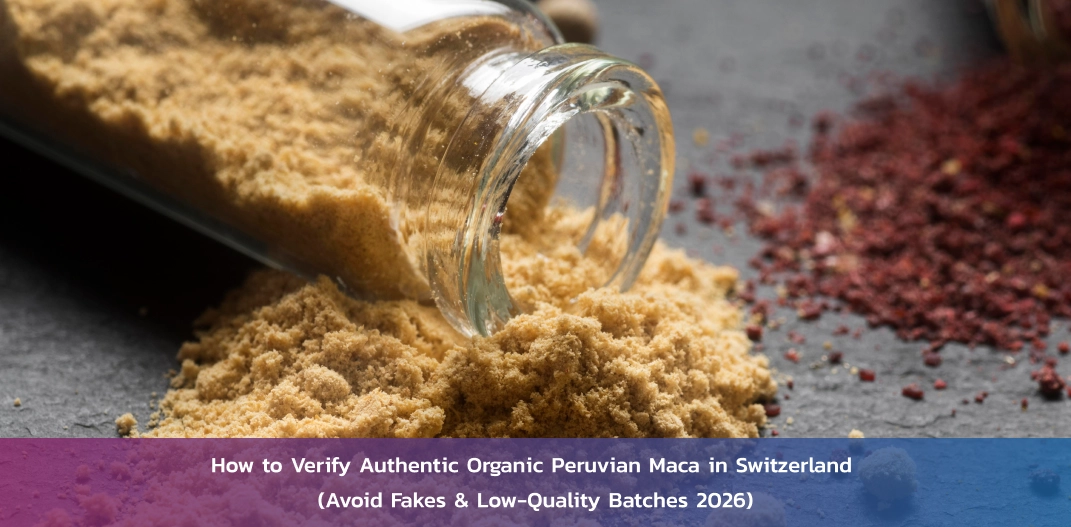
Answer: If you’re buying loose powder, authentic maca has a natural earthy smell and a slightly gritty, beige-brown texture; bright white or oddly sweet-tasting powder is a red flag.
If you’re buying capsules, you can’t judge by sight, so check the label instead: it should state the exact mg of maca per capsule, list “pure maca root” with no fillers, and show organic and GMP certification.
Question: Where is the best place to buy verified organic maca in Switzerland?
Answer: Choose Swiss-based brands that publish sourcing details, GMP/ISO certification, and lab testing; this is the safest way to buy organic maca in Switzerland with confidence.
Question: Does maca interact with fertility supplements?
Answer: No known interactions exist. Maca is commonly combined with fertility supplements like +fertimen or +fertiwomen as part of a daily routine, though it’s always wise to consult your doctor for personalised advice.
Note: This article is for general informational purposes only and is not a substitute for professional medical advice. Always consult a healthcare provider before starting any new supplement.