10% off for life with subscription + Free Shipping 


10% off for life with subscription + Free Shipping


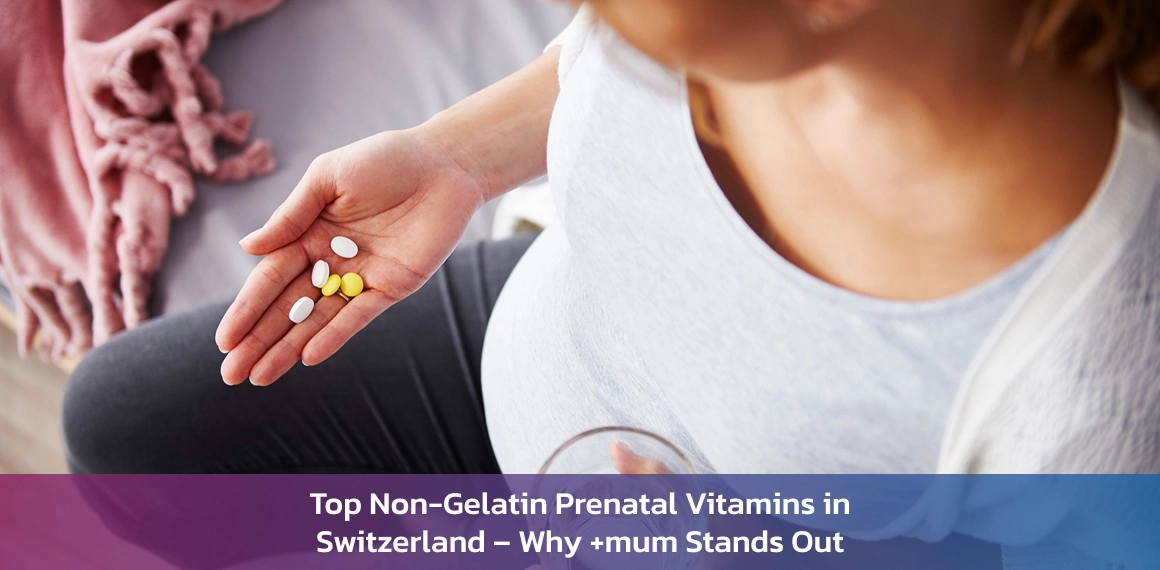
Key highlights
In Switzerland, more women are shifting toward non-gelatin prenatal vitamins Switzerland as awareness around ingredient quality and absorption grows. Traditional prenatal supplements often rely on animal-derived gelatin, which may not align with evolving dietary and lifestyle preferences.
This has led to rising demand for gelatin-free prenatal vitamins Switzerland, especially among those seeking cleaner, plant-based, and better-tolerated options during pregnancy.
The trend also reflects a broader move toward women’s fertility and prenatal support supplements in Switzerland, where safety, bioavailability, and formulation quality matter. According to Market Data Forecast, the global prenatal supplement market is expected to grow at a 6.90% CAGR, reaching USD 1,168.61 million by 2033, highlighting the increasing focus on high-quality prenatal care.
Modern solutions, including advanced vegan formulations like +mum prenatal vitamins Switzerland, are aligned with this shift.
This guide explores what makes non-gelatin prenatal vitamins a preferred choice in Switzerland and why certain formulations stand out.
Non-gelatin prenatal vitamins are supplements made without animal-derived capsule shells, using plant-based alternatives like cellulose. Unlike traditional gelatin capsules, they are better suited for modern dietary preferences and sensitivities.
While the capsule itself does not determine effectiveness, it can impact tolerance and suitability. Many women in Switzerland prefer prenatal vitamins without gelatin for cleaner formulations and compatibility with vegan, vegetarian, or halal lifestyles.
High-quality options also focus on bioavailable nutrients, such as active folate and gentle iron, to support maternal health during pregnancy and breastfeeding.
Give Your Pregnancy the Nutrition It Deserves
Support every trimester with +mum, created to provide essential nutrients without gelatin.
→ Make +mum Part of Your Routine
Women in Switzerland are increasingly choosing non-gelatin prenatal vitamins as awareness around ingredient quality, digestion, and lifestyle compatibility continues to grow. These supplements are often viewed as a cleaner and more reliable alternative to traditional formulations.
Key reasons behind this preference
| Factor | Why it matters |
| Better tolerance | Plant-based capsules and gentle nutrient forms are less likely to cause nausea or digestive discomfort |
| Lifestyle compatibility | Suitable for vegan, vegetarian, and halal dietary preferences |
| Clean-label approach | Fewer additives with more transparent ingredient sourcing |
| Focus on bioavailability | Nutrients are easier for the body to absorb and utilize effectively |
This shift reflects a broader move toward informed, health-conscious choices, where women prioritize both safety and effectiveness during pregnancy and beyond.
This growing preference is also reflected in the demand for the best vegan prenatal vitamins for pregnancy and breastfeeding, which focus on clean, plant-based formulations.
A high-quality prenatal supplement should deliver essential nutrients in forms that are both effective and easy for the body to absorb. When evaluating the best prenatal vitamins in Switzerland, it’s important to look beyond basic labels and focus on clinically relevant ingredients that support both maternal health and fetal development.
1. Active folate (5-MTHF)
Active folate in prenatal supplements in Switzerland plays a crucial role in early pregnancy, particularly in supporting neural tube development and healthy cell growth. As a bioavailable form of folate, it can be directly utilized by the body, making it especially beneficial for women who may have difficulty converting standard folate forms.
This is critical because research shows that up to 50% of the population has a genetic variation (MTHFR) that prevents them from processing synthetic folic acid. Using 5-MTHF ensures the nutrient is ‘body-ready’ for everyone.
2. Iron (gentle form)
Iron is essential during pregnancy for maintaining healthy red blood cell levels and ensuring proper oxygen supply to both mother and baby. Choosing gentle iron prenatal vitamins can help minimize common side effects such as nausea or digestive discomfort, while still supporting adequate iron levels throughout pregnancy.
We use Iron Bisglycinate, which is clinically proven to have higher absorption rates and fewer gastrointestinal side effects compared to traditional Ferrous Sulfate.
3. Iodine
Iodine supports thyroid function, which plays a key role in regulating metabolism and hormonal balance during pregnancy. It is also critical for fetal brain and nervous system development, making it an important nutrient in any well-formulated prenatal supplement.
4. Vitamin D & DHA
Vitamin D contributes to immune function, calcium absorption, and bone health, while DHA, an essential omega-3 fatty acid, supports the baby’s brain and eye development. A well-balanced Swiss prenatal multivitamin typically includes these nutrients to provide more complete support during pregnancy and breastfeeding.
Understanding the role of active folate is important, especially when comparing formulations like +mum vs generic prenatal pills, and why Quatrefolic (5-MTHF) matters for better absorption.
Not all prenatal supplements are formulated the same. Traditional options often focus on basic nutrient inclusion, while modern formulations emphasize clean ingredients, better absorption, and broader dietary compatibility.
| Factor | Traditional prenatal vitamins | Modern clean prenatal vitamins |
| Capsule source | Typically animal-derived gelatin | Plant-based (HPMC), suitable as prenatal vitamins without gelatin |
| Nutrient forms | May include standard or synthetic forms | Focus on bioavailable nutrients for better absorption |
| Iron tolerance | Can cause nausea or discomfort | Uses gentle iron prenatal vitamins for improved tolerance |
| Dietary compatibility | Limited consideration | Often vegan, vegetarian, and gluten-free friendly |
| Formulation approach | Basic nutrient inclusion | Clean-label, minimal additives, and transparent sourcing |
These differences reflect a broader shift toward cleaner, more thoughtfully designed supplements. As a result, many women now prefer non-gelatin options that support both nutritional needs and lifestyle choices.
You can also read our complete mum vs elevit prenatal comparison guide to understand the differences in folate, digestion support, and formulation style.
When evaluating the best prenatal vitamins in Switzerland, it’s important to look beyond basic claims and focus on formulation quality, safety standards, and how well the nutrients are absorbed by the body.
A high-quality prenatal supplement typically includes:
Well-formulated options also include essential combinations like folic acid and iron pregnancy requirements in Switzerland, ensuring the body receives the right nutrients at the right levels.
Choosing the right prenatal vitamin ultimately comes down to trust, formulation transparency, and how well it supports real nutritional needs during pregnancy.
When evaluating quality and sourcing, it’s also helpful to understand where to buy prenatal vitamins in Switzerland with folate and iron that meet clinical standards and safety expectations.
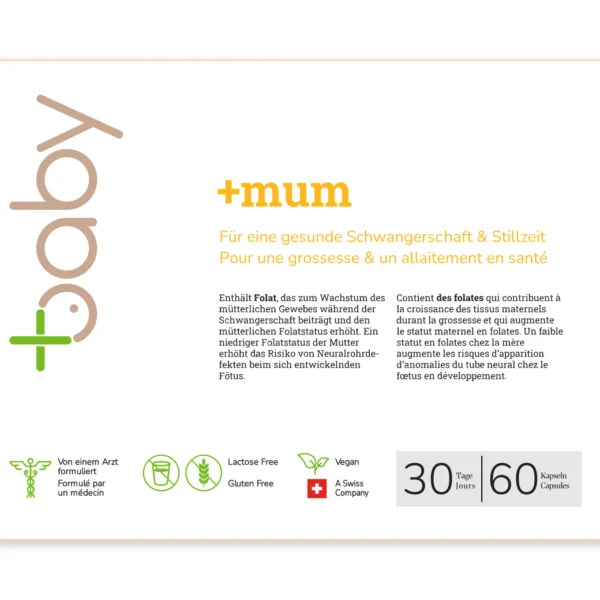
Among the many options available, +mum prenatal vitamins Switzerland are designed with a clear focus on quality, safety, and real nutritional needs during pregnancy. The formulation reflects a modern approach, combining clean ingredients with clinically relevant nutrients that support women across every stage of motherhood.
1. Clean, plant-based formulation
+mum is developed as a prenatal vitamin without gelatin option, using HPMC (plant-based) capsules that align with vegan and halal lifestyles. The formula is free from unnecessary additives, making it a cleaner and more conscious choice.
2. Swiss-quality standards and safety
As a Swiss prenatal multivitamin, +mum is designed in Switzerland and follows strict quality benchmarks. It is GMP certified, ensuring consistency, safety, and ingredient purity.
Formulated by Dr. A. Fischer-Stoca who combined years of clinical practice in Switzerland with the latest nutritional science to remove animal by-products without sacrificing potency.
3. Clinically selected nutrients
The formulation includes 16 essential nutrients required during pregnancy, carefully selected for effectiveness and absorption. This includes Quatrefolic® (5-MTHF), an advanced form of folate, along with gentle iron prenatal vitamins, vitamin D3, iodine, and other key micronutrients that support both maternal health and fetal development.
Designed for complete journey support
+mum is created to support women from preconception through pregnancy and into breastfeeding, offering balanced nutrition aligned with prenatal vitamins for pregnancy and breastfeeding needs.
What makes +mum a reliable choice
This combination of clean formulation, clinically backed ingredients, and Swiss-quality standards makes +mum a dependable option for modern prenatal care.
Here is a quick overview of the recommended timeline for taking prenatal vitamins:
| Stage | When to start | Why it matters |
| Preconception | 2–3 months before trying | Builds folate and iron levels early |
| Early pregnancy | As soon as confirmed | Supports early fetal development |
| Pregnancy | Continue daily | Meets increased nutrient needs |
| Breastfeeding | After delivery | Supports recovery and milk nutrition |
Consistent use of prenatal vitamins for pregnancy and breastfeeding helps ensure ongoing nutritional support for both mother and baby.
For those in the early planning stage, following a structured approach like a one-month fertility boost plan using myo-inositol, maca, and fertility vitamins can help prepare the body before conception.
Getting the most out of prenatal vitamins is not just about what you take, but how consistently and effectively you use them in your daily routine.
These small habits can make a meaningful difference in how well your body absorbs and utilizes essential nutrients during pregnancy.
Personal insight: consistency over perfection
From experience, the real difference comes from staying consistent rather than trying to follow a perfect routine. Prenatal supplements work best when taken daily alongside simple habits like balanced meals and hydration. Small, steady efforts often lead to better results than occasional, ideal routines.
I founded Plusbaby after seeing how many women in Switzerland had to choose between their ethical lifestyle and high-quality prenatal care. I wanted to create a solution that was 100% Swiss-standard but also 100% vegan.
–Magali Russell,
Founder of Plusbaby
The Plusbaby approach focuses on clean formulations, bioavailable nutrients, and real nutritional needs during pregnancy. Products like Plusmum prenatal vitamins Switzerland are designed to offer balanced support with plant-based capsules and well-selected ingredients.
With options aligned to prenatal vitamins, vegan halal preferences, and Swiss-quality standards, the focus remains on safety, absorption, and daily comfort.
There’s More Waiting for You
Looking beyond prenatal vitamins? Find carefully crafted wellness solutions for every stage of motherhood.
→ Take a Look Around
Disclaimer: This content is for informational purposes only and does not replace medical advice. Please consult a healthcare professional before starting any supplement.
Question: What are non-gelatin prenatal vitamins in Switzerland?
Answer: These are prenatal supplements made without animal-derived gelatin, using plant-based capsules instead. They are suitable for women looking for cleaner, more digestible options during pregnancy.
Question: Are gelatin-free prenatal vitamins in Switzerland better for digestion?
Answer: Many women find gelatin-free prenatal vitamins Switzerland easier to tolerate, especially when combined with bioavailable nutrients and gentle iron that reduce common side effects.
Question: What nutrients should I look for in prenatal vitamins?
Answer: Key nutrients include active folate, iron, iodine, vitamin D3, and DHA. These support fetal development and maternal health throughout pregnancy.
Question: Can I take prenatal vitamins before pregnancy?
Answer: Yes, starting prenatal vitamins 3-6 months before conception helps build essential nutrient levels and supports early fetal development.
Question: Are vegan prenatal vitamins in Switzerland effective?
Answer: Yes, vegan prenatal vitamins in Switzerland can be effective when they include clinically selected, bioavailable nutrients- and meet pregnancy nutritional requirements.