10% off for life with subscription + Free Shipping 


10% off for life with subscription + Free Shipping


Written by the Magali Russell
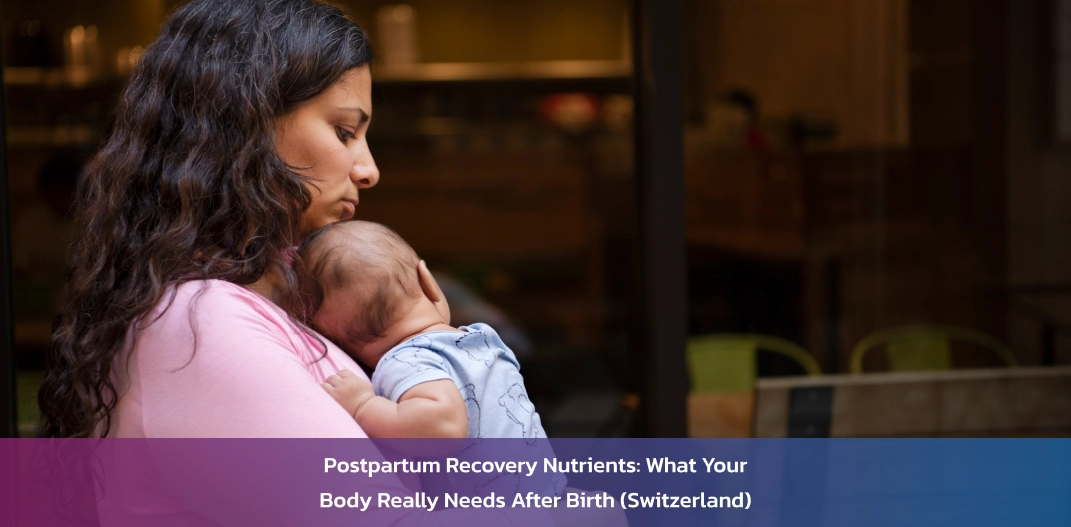
Elena, a 32-year-old teacher from Lausanne, gave birth six weeks ago. She expected sleepless nights. She did not expect the constant exhaustion that rest alone could not fix. Her story is common among new mothers in Switzerland.
Understanding postpartum vitamins helps explain what her body truly needed after delivery.
Plusbaby, known as a Swiss Vegan Fertility Leader, supports women through every stage, from fertility to birth and beyond.
This guide explains the postpartum vitamins and nutrients after birth your body requires, and how postpartum recovery works in the Swiss context. It follows Elena’s own experience, alongside guidance from her midwife and family doctor. Pregnancy nutrition focuses on growing a baby.
Postpartum recovery supplements focus on healing a mother’s own body. These two goals need different levels of iron, vitamins, and rest, and mixing them up is one of the most common mistakes new mothers make.
Table of Contents
ToggleAfter delivery, Elena’s body began a slow repair process. Blood loss during childbirth lowers iron stores quickly. Hormone levels drop suddenly once the placenta is delivered, which affects both mood and energy. Tissue healing requires protein, zinc, and vitamin C, and sleep disruption adds further strain on the body.
These combined changes explain why recovery after childbirth Switzerland looks different for every woman. Many new mothers underestimate how depleted their bodies become. Elena felt this depletion as fatigue that lasted weeks, not days.
Her family doctor explained that this pattern is normal, but manageable with the right support.
Here is a simple view of what her body went through, stage by stage.
| Stage | Timeframe | What Happens |
| Birth and Delivery | Day 0 | Placenta is delivered, blood loss occurs |
| Blood and Hormone Shift | Days 0 to 3 | Iron drops, hormone levels fall sharply |
| Nutrient Depletion | Weeks 1 to 2 | Iron, B12, and vitamin D reserves run low |
| Body Repair Begins | Weeks 1 to 6 | Tissue heals, energy slowly returns |
| Nutrient Stores Rebuild | Months 1 to 6 | Levels normalize with the right nutrition |
Before you reach for another coffee:
Fatigue after birth is often about iron, not just sleep. Ask your midwife or family doctor for a simple blood test first.
+mum is built around bisglycinate iron, a gentle form suited to a healing body.
Elena’s family doctor explained the main postpartum vitamins her body needed during recovery. Each nutrient plays a distinct role in healing, energy, and mood.
| Nutrient | Why It Matters After Birth |
| Iron (bisglycinate) | Replaces blood loss, reduces fatigue, gentle on digestion |
| Vitamin D3 | Supports bone health, mood, and immune recovery |
| Omega 3 DHA | Supports mood balance and tissue repair |
| Folate (Quatrefolic®) | Supports cell repair and future pregnancy planning |
| Vitamin B12 | Supports energy and nervous system recovery |
| Choline | Supports milk production and cognitive recovery |
| Magnesium and Zinc | Supports healing, mood, and hormonal balance |
| Protein and Calcium | Supports tissue repair and bone density |
These nutrients after birth work together to rebuild what pregnancy and delivery used.
A balanced intake supports steady postpartum recovery over the following months. Missing just one of these nutrients rarely causes a single obvious symptom.
More often, it shows up as a combination of tiredness, low mood, and slow healing that new mothers assume is simply part of early parenthood.
Think of it as a relay, not a single race:
If fatigue continues despite adequate rest, this guide to persistent fatigue after pregnancy explains when low iron or B12 may be worth discussing with your midwife or family doctor.
Elena chose to breastfeed her daughter. Her family doctor explained that essential nutrients breastfeeding mothers need are higher than for mothers who do not breastfeed.
Martina, a nurse from Zurich, chose not to breastfeed her son. Her family doctor confirmed she still needed daily iron and vitamin D, just at slightly different amounts than Elena.
Breastfeeding mothers need more of:
Non-breastfeeding mothers still need:
Every mother’s situation differs. A midwife or family doctor can assess individual needs based on delivery type, diet, and health history.
Elena noticed hair loss around week eight, along with tiredness that felt different from normal new parent fatigue.
Chantal, a friend of hers from Geneva, went through something similar after her second birth, only she noticed dizziness before anything else.
Common signs to watch for:
What to do next:
Elena’s blood test confirmed low iron, which explained much of her fatigue. Supplements do not replace medical diagnosis or treatment.
The simple path Elena followed:
Notice symptoms (fatigue, hair loss, low mood) and talk to your midwife or family doctor to a blood test (iron, vitamin D, B12).
If levels are normal, continue a food-first approach. If levels are low, consider doctor-guided postpartum vitamins.
Four short steps. No guesswork. Just a clear path from something feels off to here is what to do next.
Elena’s family doctor recommended a food-first approach before adding any supplement. Postpartum recovery food should include iron-rich and protein-rich options that are easy to find in Switzerland.
| Nutrient | Swiss Food Sources |
| Iron | Lentils, spinach, whole grains |
| Vitamin D | Fortified plant milk, mushrooms |
| Omega 3 | Flaxseed, walnuts, algae oil |
| Protein | Legumes, tofu, dairy alternatives |
| Calcium | Fortified plant milk, almonds |
Food provides a strong foundation for postpartum recovery. Knowing how to prepare for postpartum recovery in advance made Elena’s transition home smoother.
Her postpartum recovery checklist included a short list of easy meals for the first weeks. She also kept a few iron-rich snacks within reach, since sitting down for a full meal was not always realistic between feeds.
For a more detailed meal-by-meal approach, see this postpartum diet plan covering foods that can support healing after pregnancy and birth.
Elena struggled to eat enough iron-rich food while caring for a newborn. Her family doctor suggested postpartum vitamins to fill the remaining gaps.
Not every supplement suits a healing body. Absorption and gentleness matter as much as the nutrient list itself.
Her family doctor pointed to a few things worth checking before choosing one:
Elena’s family doctor mentioned +mum as one option that met these points. It was formulated by Swiss doctors for the postpartum and breastfeeding period, and it does not replace medical treatment, diagnosis, or advice from your midwife or family doctor. Sophie, a mother of two from Bern, made a similar choice after her own family doctor reviewed her blood work.
These postpartum recovery tips for new moms are a starting point, best reviewed with your own midwife or family doctor.
If you are comparing options, this guide to prenatal vitamins in Switzerland with folate and iron explains what to look for when choosing a prenatal formula.
Dr. A. Fischer Stoca, a Swiss specialist in obstetrics and gynaecology, notes that postpartum nutrition often receives less attention than pregnancy nutrition.
She recommends that new mothers review their nutrient intake at their postpartum check-up, which in Switzerland typically happens around six weeks after delivery.
This kind of postpartum check-up in Switzerland supports a smoother recovery and better long-term outcomes for mother and baby.
Several published studies and official guidelines support the nutrients discussed in this guide.
These findings support a nutrient-focused, evidence-based approach to postpartum recovery.
Elena’s postpartum recovery improved once she understood what her body needed. Postpartum vitamins support healing, energy, and mood after birth. Iron, vitamin D, omega-3, and folate support most women during this period.
Plusbaby, a Swiss Vegan Fertility Leader, continues supporting women from fertility through pregnancy and postpartum recovery.
Its +mum formula was designed by Swiss doctors specifically to support this stage, using high-bioavailability, vegan nutrients. Speak with your midwife or family doctor to build a plan suited to your own body, and consider whether +mum fits into it.
One small step for the weeks ahead:
+mum was formulated by Swiss doctors for pregnancy and breastfeeding support, built around high bioavailability and vegan nutrients.
See whether it fits into your daily postpartum routine.
Question: How long does postpartum recovery take, nutritionally?
Answer: Nutrient stores can take several months to rebuild after birth. Iron, in particular, often takes longer than most mothers expect. The exact timeline depends on blood loss, diet, and breastfeeding status.
Question: Can I continue prenatal vitamins after delivery?
Answer: Some women continue a similar formula, since needs remain elevated. But postpartum needs differ slightly, especially for iron and choline. Ask your midwife or family doctor which option suits your recovery. If you are unsure how long to take prenatal vitamins after birth, speak with your midwife or family doctor about the right option for your recovery.
Question: What is the difference between prenatal and postpartum vitamins?
Answer: Postpartum formulas often adjust iron, choline, and vitamin D to support recovery and breastfeeding. Prenatal formulas focus more on the baby’s development in the womb. After birth, the focus shifts to healing and milk production.
Question: Is it safe to take supplements while breastfeeding?
Answer: Most doctors approve targeted supplements during breastfeeding. High bioavailability, doctor-formulated options are usually easier to process. Always confirm the right choice with your midwife, family doctor, or gynaecologist.
Question: What belongs on a postpartum recovery checklist?
Answer: A simple checklist includes a blood test, a review of current vitamins, and a realistic food plan. Rest, practical support, and a follow-up appointment also belong on the list.
Note: Plusbaby resources provide general information and are not a substitute for professional medical advice, diagnosis, or treatment.
Table of Contents
ToggleAcheter les produits de cet article

I am Magali Russell, the founder of Plusbaby. With over 15 years of experience in research and development, I created and led a preclinical research organisation that conducted rigorous scientific studies on numerous products.The moving stories of women and couples struggling with infertility left a lasting impression on me. This is how I found my calling in life: helping others become parents by offering them genuine support.
Convinced of the benefits of natural products, I created Plusbaby: vegan dietary supplements, developed in Switzerland, combining proven science and pure, premium, additive-free ingredients to boost fertility naturally.
Continue reading