10% off for life with subscription + Free Shipping 


10% off for life with subscription + Free Shipping


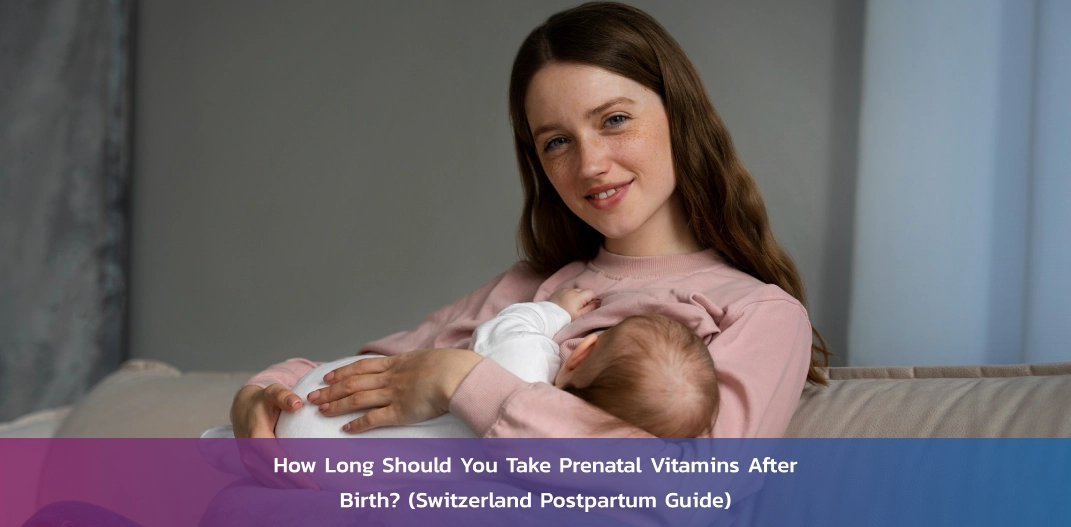
Nadia sat in her kitchen in Bern, six weeks after her daughter’s birth. Her prenatal vitamin bottle stood on the counter. She had taken it every day during pregnancy.
Now she wondered: should she keep going?
Her body still felt tired. Her hair was thinning. She had questions no one had answered clearly.
This is a common moment for new mothers in Switzerland. Many ask the same thing: how long should you take prenatal vitamins after birth?
The short answer is that most women benefit from continuing for several months, especially if they are breastfeeding.
As a Swiss Vegan Fertility Leader, Plusbaby supports mothers with clear, doctor-guided answers to this exact question.
This guide explains how long take prenatal vitamins after birth, which nutrients matter most, and when it may be time to stop.
Birth uses up many nutrient stores. Blood loss during delivery lowers iron levels. Pregnancy itself lowers folate, vitamin D, and magnesium reserves.
For this reason, how long should you take prenatal vitamins after birth is not a simple yes-or-no question. It depends on your recovery, your feeding choice, and your test results.
As a general guide, most women continue for three to six months. Women who breastfeed often continue longer.
Women who do not breastfeed may reduce or stop sooner, once iron and vitamin levels return to normal ranges. Your midwife or family doctor (Hausarzt / médecin de famille) can confirm this with a simple blood test.
A Gentle Next Step for Your Postpartum Body
You gave your body fully during pregnancy and birth.
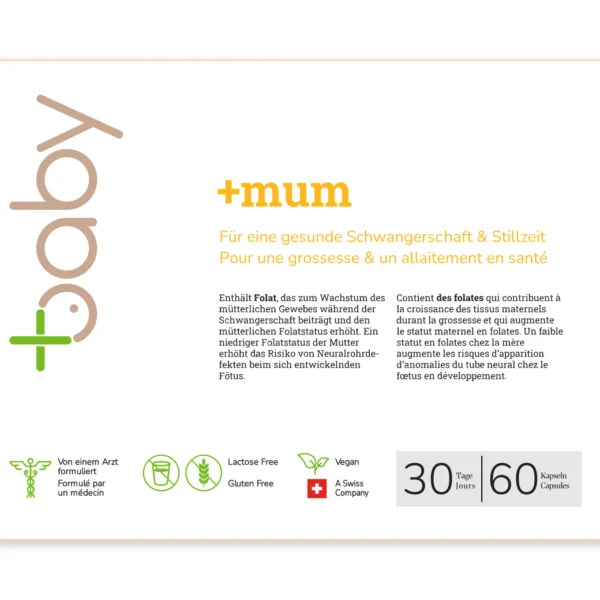
It deserves the same care now. +mum was formulated by Swiss doctors with bisglycinate iron, active folate, vitamin D, omega-3, and magnesium, all in one gentle, vegan formula.
👉 Discover +mum for your postpartum recovery!
Nadia’s midwife explained it simply. Pregnancy asks a lot from the body. Birth is not the end of that effort. Recovery still needs fuel to heal and produce milk.
Iron stores are often the most affected. Blood loss during delivery, even a normal delivery, can reduce iron significantly. This is one reason iron deficiency after birth is so common. Fatigue, dizziness, and low mood can follow. Folate, vitamin D, and magnesium also drop, since pregnancy draws heavily on these reserves.
This is why postpartum recovery nutrition should not stop the day the baby arrives. The needs simply shift in focus, from growing a baby to rebuilding a mother.
During pregnancy, nutrients support the baby’s growth. After birth, the same nutrients support two things: your healing body and, if breastfeeding, your milk supply. This is the core idea behind prenatal vitamins postpartum use.
Understanding why prenatal vitamins are important in the first place can also make it easier to evaluate what your body needs after birth.
The nutrient list stays largely the same. Iron, folate, vitamin D, omega-3, and magnesium remain central. What changes is the reason you take them. You are no longer building a baby’s organs. You are rebuilding your own strength while nourishing your infant through milk.
Breastfeeding increases nutrient demand. Your body passes vitamins and minerals into breast milk every day. This makes prenatal vitamins while breastfeeding especially useful for both mother and baby.
Many mothers choose to continue through the entire breastfeeding period. This supports breastfeeding nutrient needs, such as omega-3 for the baby’s brain development and vitamin D for healthy bones. Once breastfeeding ends, needs usually decrease. A doctor can help decide the right point to lower your dose or stop.
For women looking for vegan prenatal vitamins for pregnancy and breastfeeding, the formulation should provide nutrients that support both maternal needs and breastfeeding.
When to stop prenatal vitamins is a personal decision, guided by your body and your doctor.
There is no single rule that fits every woman.
| Situation | General Guidance |
|---|---|
| Breastfeeding | Continue through the breastfeeding period |
| Formula feeding or weaned | Reassess around 3 months, based on bloodwork |
| Normal iron and vitamin D levels | May reduce dose or switch to a lower-strength supplement |
| Ongoing fatigue or low mood | Continue and discuss testing with your midwife or family doctor |
| Planning another pregnancy soon | Continue folate and iron support |
Bloodwork remains the most reliable guide. A simple test can confirm whether iron, folate, and vitamin D levels have returned to a healthy range.
This removes the guesswork from taking prenatal vitamins postpartum.
| Nutrient | Why It Matters Postpartum | Typical Duration |
|---|---|---|
| Iron (bisglycinate) | Replaces blood loss, supports energy, gentle on digestion | 3–6 months, based on bloodwork |
| Active folate (Quatrefolic®) | Supports cell repair and absorbs well | Through breastfeeding |
| Vitamin D | Supports bone health for mother and baby | Through breastfeeding, year-round in Switzerland |
| Omega-3 (DHA) | Supports mood, recovery, and milk quality | Through breastfeeding |
| Magnesium | Supports sleep, muscle recovery, and energy | 3–6 months, or longer if fatigue persists |
Bisglycinate iron is gentler on the stomach than standard iron salts. This matters for new mothers already managing digestive changes. Active folate, such as Quatrefolic®, is absorbed more efficiently than standard folic acid.
Vitamin D deserves special attention in Switzerland, where sunlight exposure is limited for much of the year. This links directly to vitamin D postpartum mother needs, especially between October and March.
If you are comparing prenatal vitamins in Switzerland, understanding the role of folate and iron can help you choose a formulation that matches your needs.
Switzerland has one local factor worth knowing. Limited winter sunlight means many breastfeeding women struggle to reach optimal vitamin D through diet and daylight alone. This makes postpartum vitamins Switzerland guidance slightly different from sunnier countries.
Dr. A. Fischer-Stoca, FMH Specialist in Obstetrics and Gynaecological Surgery, supports Plusbaby’s approach to formulation. Swiss doctors generally favour continued supplementation through breastfeeding, combined with periodic blood testing, rather than a fixed stop date.
Nadia’s fatigue did not fully lift at six weeks. Her midwife or family doctor suggested a blood test. Her ferritin, a marker of iron storage, was still low. This is common and nothing to feel concerned about. It simply means her body needed more time.
Watch for these signs postpartum fatigue vitamins may help address:
If you are planning another pregnancy soon after this one, continuing folate and iron support is often advised. This helps rebuild reserves before your next pregnancy begins.
If fatigue continues beyond normal new-parent exhaustion, it is worth understanding whether low iron, vitamin B12, or another nutrient deficiency could be contributing.
+mum was created by Swiss doctors with 17 nutrients in one formula. It includes bisglycinate iron for gentle absorption, active folate, vitamin D, omega-3, and magnesium. It is 100% vegan, free from artificial colours and preservatives, and manufactured under GMP and ISO standards.
For mothers comparing clean-label vegan prenatals in Switzerland, it is also important to look beyond the ‘vegan’ label and check the nutrient forms, dosages, and overall formulation.
This formulation directly addresses the nutrients most needed for prenatal vitamins postpartum support, whether you are breastfeeding or recovering from delivery.
Plusbaby designed +mum around one idea: the postpartum body deserves the same careful formulation as the pregnant body. Many supplements are built for pregnancy alone, then left unchanged after birth. +mum was built differently, with doses suited to recovery and lactation.
Every batch is lab-tested, with no unnecessary fillers. This means one consistent supplement, without needing to switch products mid-recovery. That simplicity is part of why many Swiss mothers choose Plusbaby from pregnancy through the postpartum months.
Elodie, 34, from Geneva, continued her supplement through nine months of breastfeeding. Her energy stabilised by the third month, once bloodwork confirmed her iron levels were improving. She found it simple to keep one routine going during a demanding time.
Chantal, 29, from Zurich, stopped at four months, once bloodwork confirmed healthy iron and vitamin D levels. She restarted a lower dose later, while planning a second pregnancy. Her story shows why taking prenatal vitamins postpartum should follow bloodwork, not a fixed date.
If you are searching for how long take prenatals after birth, you are not alone. It is one of the most common questions new mothers ask.
Nadia’s story is not unusual. Many Swiss mothers reach six weeks postpartum and wonder if it is time to stop their supplements. The honest answer to how long should you take prenatal vitamins after birth is that it depends on your body, your feeding choice, and your bloodwork.
For most women, continuing through breastfeeding and reassessing every few months offers a supportive path to recovery.
Prenatal vitamins after birth are not just a continuation of pregnancy habits. They are a targeted form of support for a body that has given a great deal and deserves careful, evidence-based care.
As a Swiss Vegan Fertility Leader, Plusbaby designed +mum to make that support simple, gentle, and grounded in real Swiss medical guidance.
Give Your Recovery the Same Care You Gave Your Pregnancy
Every mother’s postpartum path looks different.
Yours deserves a formula built for it. +mum brings together bisglycinate iron, active folate, vitamin D, omega-3, and magnesium, designed by Swiss doctors for the months after birth.
👉 Explore +mum and support your postpartum recovery
Question: How long should you take prenatal vitamins after birth if not breastfeeding?
Answer: Most women continue for around three months, then review bloodwork before deciding to stop. This gives the body enough time to rebuild iron and folate stores lost during delivery. After that, a simple blood test can confirm whether it is safe to stop or reduce the dose.
Question: Can you take prenatal vitamins postpartum forever?
Answer: Long-term use is generally safe under medical guidance, but doses should match your current needs, not pregnancy-level needs indefinitely.
Question: Do postpartum vitamins differ from pregnancy vitamins?
Answer: The core nutrients are similar. The focus shifts from fetal growth to maternal recovery and milk production.
Question: How long take prenatals after birth if I had a difficult delivery?
Answer: Women with higher blood loss often need iron support for longer. A blood test after six weeks helps confirm this. In these cases, how long take prenatal vitamins after birth often extends beyond six months.
Question: Is it normal to still feel tired even while taking prenatal vitamins after birth?
Answer: Yes, especially in the first months. Sleep changes contribute too. If fatigue persists, ask your midwife or family doctor about a blood test.
Note: This article is for general information only. It does not replace medical advice, diagnosis, or treatment. Please consult your midwife, family doctor or gynaecologist about your individual postpartum needs.