10% off for life with subscription + Free Shipping 


10% off for life with subscription + Free Shipping


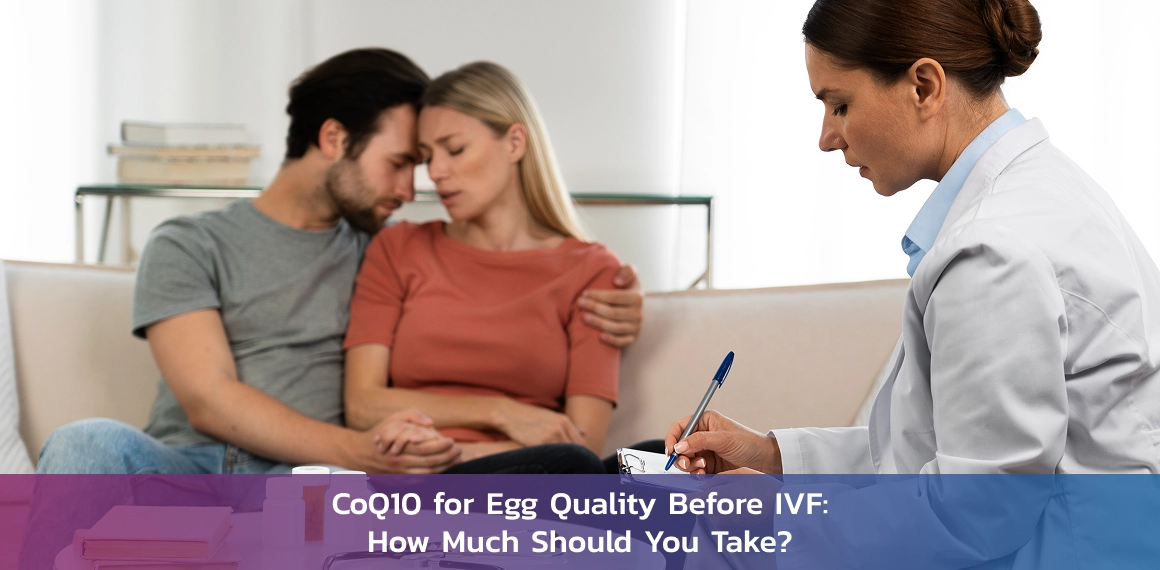
Meet Sara. She’s 37. Based in Zurich. On her second IVF cycle.
Her first retrieval gave her three eggs. Only one fertilised. It didn’t implant.
Her doctor said her egg quality wasn’t ideal — and suggested she look into her pre-IVF prep. A colleague mentioned CoQ10. Sara had heard of it but didn’t know where to start.
How much? Which form? When?
If that sounds like you, this guide is written for you.
CoQ10 for egg quality before IVF is now one of the most widely recommended strategies among reproductive specialists. And the science behind it is genuinely compelling.
As a Swiss Vegan Fertility Leader, Plusbaby has helped thousands of women prepare smarter, not just harder. Here’s everything you need to know.
Here’s the truth most women aren’t told early enough:
IVF success is less about the procedure and more about the eggs going into it.
Poor egg quality is behind most failed fertilisations, poor embryo development, and failed implantations. And the root cause almost always comes back to one thing: mitochondrial dysfunction.
Eggs are the most energy-hungry cells in your entire body.
To mature properly, fertilise, and grow into a viable embryo, they need enormous amounts of ATP. ATP is produced by mitochondria. And mitochondria run on CoQ10.
After your mid-thirties, your body produces less CoQ10 naturally. The eggs you’re producing right now have less fuel than the eggs you made at 28.
The result?
This isn’t bad luck. It’s biology. And biology responds to the right inputs.
Who is most at risk? Women over 35 · DOR diagnosis · Previous poor responders · Repeat IVF cycles
Along with CoQ10, healthy lifestyle habits and proper nutrition may help increase your chances of getting pregnant naturally.
Coenzyme Q10 is a naturally occurring compound found in every cell of your body.
It does two things your eggs urgently need:
Think of it like this.
Your egg is about to run the most demanding race of its biological life. CoQ10 is the fuel in the tank. Without enough of it — the engine doesn’t fire.
The coenzyme Q10 fertility research is now robust. Here’s what the key studies found:
Key Clinical Studies on CoQ10 and IVF
| Study | Year | Finding |
| Ben-Meir et al. (Aging Cell) | 2015 | CoQ10 reversed mitochondrial decline in aging eggs; restored fertility markers |
| Xu et al. (Reprod Biol Endocrinol) | 2018 | 600 mg/day × 60 days → more eggs, higher fertilisation rate, more quality embryos |
| Hu et al. (Front Endocrinol) | 2023 | Improved oocyte quality and clinical pregnancy rates across trials |
| Lin et al. (Ann Med) | 2024 | CoQ10 before IVF improved pregnancy rates, embryo quality, reduced injections needed |
The pattern is clear.
CoQ10 for IVF success is strongest in women over 35 and those with diminished ovarian reserve. But benefits appear across all age groups, and CoQ10 for women over 35 shows the most consistent clinical signal of all.
Looking for a structured approach? A fertility boost plan before IVF can help you prepare your body in the months leading up to treatment.
How much CoQ10 to take before IVF
This is the question Sara, and most women, actually want answered.
Getting the CoQ10 dosage before IVF right matters more than the brand you choose.
CoQ10 Dosage by Situation
| Your Situation | Daily Dose | Best Form | Key Tip |
| General fertility prep (under 35) | 200–400 mg | Ubiquinone or Ubiquinol | Split into 2 doses with meals |
| IVF prep / DOR | 400–600 mg | Ubiquinol preferred | The most studied range in clinical trials |
| Women over 40 | 600–800 mg | Ubiquinol | Discuss with your RE before exceeding 600 mg |
| Budget-conscious | 200–300 mg | Ubiquinone | Less bioavailable but clinically studied |
The rule: CoQ10 for fertility is not a one-dose fix. It works through accumulation over weeks and months. Split your dose. Take it with food. Be consistent.
When to start — the 90-day rule
Here’s the fact that surprises almost everyone.
Eggs take 90 days to mature.
The egg retrieved in your October retrieval was already developing back in July.
This means CoQ10 before egg retrieval only works if you start months ahead, not the week your clinic calls.
Lock in your CoQ10 dosage before IVF well before that window opens.
While CoQ10 receives most of the attention for egg quality support, healthy egg development depends on much more than mitochondrial energy alone.
Ovulation, follicle growth, hormone balance, and embryo development require a combination of nutrients working together throughout the menstrual cycle.
This is why many fertility specialists recommend a comprehensive fertility-support approach rather than relying on a single ingredient.
Some of the most important nutrients for reproductive health include:
Myo-Inositol is commonly used alongside CoQ10 to support ovarian function, ovulation, and egg quality during IVF preparation.
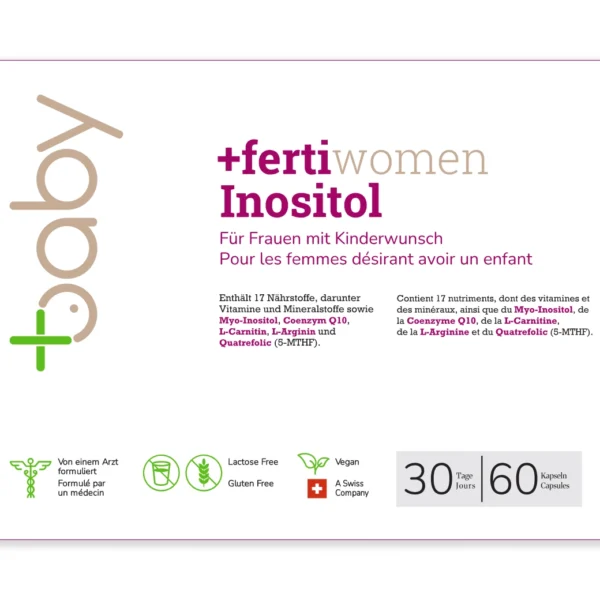
For women trying to simplify their fertility routine, Plusfertiwomen combines CoQ10, Myo-Inositol, Quatrefolic® active folate, Vitamin D3, Zinc, Selenium, and additional fertility-support nutrients in one vegan formula.
Rather than focusing only on egg quality, the formula is designed to support:
For many women, this eliminates the need to manage multiple supplement bottles while ensuring consistent daily nutritional support throughout the fertility journey.
Ready to start your 90-day protocol?
Plusfertiwomen by Plusbaby is the complete vegan fertility formula designed for exactly this stage of your journey.
CoQ10 · Myo-Inositol · Quatrefolic® Active Folate · Vitamin D3 · Zinc · Selenium · 9 more nutrients
Doctor-formulated in Switzerland. No fillers. No artificial additives. No compromise.
CHF 55.90 · Free Swiss delivery · Buy 3, get 1 free
CoQ10 works best as part of a complete pre-IVF plan.
A quality CoQ10 supplement for IVF preparation should not stand alone, and the best CoQ10 for fertility protocols always combine it with targeted co-nutrients.
Here’s the full picture, and where Plusfertiwomen fits:
Pre-IVF Supplement Stack
| Supplement | Why It Matters | In Plusfertiwomen? |
| CoQ10 | Mitochondrial energy, egg antioxidant protection | Yes |
| Myo-Inositol | Ovarian function, insulin sensitivity, ovulation quality | ✅Yes |
| Active Folate (5-MTHF) | DNA synthesis; neural tube protection | Yes (Quatrefolic®) |
| Vitamin D3 | Directly linked to IVF success rates | Yes |
| Zinc | Hormone regulation, egg maturation | Yes |
| Selenium | Antioxidant support, thyroid function | Yes |
| Omega-3s | Reduces inflammation | Yes |
No more managing eight different bottles.
Plusfertiwomen covers the core stack in one clean formula, making the consistency you actually need far easier to maintain.
CoQ10 works best when combined with other essential fertility vitamins and minerals that support reproductive health before conception.
CoQ10 is well tolerated by most women. The most common issue is mild nausea on an empty stomach. Simple fix: always take it with a meal.
Check with your doctor first if you take:
One important rule: Most clinics recommend pausing your CoQ10 supplement for IVF once stimulation injections begin. Follow your reproductive endocrinologist’s protocol precisely from that point.
What CoQ10 for women over 35 can realistically do:
What it cannot do:
For many women, CoQ10 for IVF success is the difference between one viable blastocyst and three.
It is not a miracle. It’s smart preparation.
Many women also combine CoQ10 with other supplements that support egg quality, particularly when preparing for IVF after 35.
Preparing for IVF starts long before retrieval day. Research suggests that CoQ10 may support mitochondrial function, reduce oxidative stress, and help create a healthier environment for developing eggs. When combined with proper nutrition and targeted fertility support, it can become an important part of your pre-IVF preparation plan.
Sara started her 90-day protocol. Now it’s your turn.
She came in with two eggs and one failed cycle. She left her third retrieval with five eggs and three blastocysts.
The difference wasn’t luck. It was 90 days of the right preparation.
As Switzerland’s Swiss Vegan Fertility Leader, Plusbaby formulated Plusfertiwomen specifically for women preparing for IVF, with CoQ10, active folate, Myo-Inositol, and other essential fertility-support nutrients.
Your retrieval window is already counting down.
Shop Plusfertiwomen — CHF 55.90 | Free Swiss Delivery | Vegan | Doctor-Formulated In Switzerland | Buy 3, Get 1 Free.
Question: How much CoQ10 should i take before ivf?
Answer: Most fertility studies have used between 400–600 mg of CoQ10 daily, particularly for women preparing for IVF. The ideal dosage may vary depending on age, ovarian reserve, and your fertility specialist’s recommendations.
Question: When should i start taking CoQ10 before ivf?
Answer: Fertility experts generally recommend starting CoQ10 at least 3 months before egg retrieval, as eggs take approximately 90 days to mature. Starting earlier may provide more time to support developing eggs.
Question: Can CoQ10 improve egg quality before ivf?
Answer: Research suggests that CoQ10 may help support mitochondrial function and reduce oxidative stress in developing eggs. Several studies have reported improvements in egg quality, fertilisation rates, and embryo development, especially in women over 35.
Question: Should i take CoQ10 alone or with other fertility supplements?
Answer: CoQ10 works best as part of a broader fertility-support plan. Nutrients such as Myo-Inositol, active folate (5-MTHF), Vitamin D3, Zinc, and Selenium are often used alongside CoQ10 to support ovulation, egg quality, and overall reproductive health. Products like Plusfertiwomen combine these key nutrients in one fertility-focused formula.
Note: This article is for informational purposes only and does not constitute medical advice. Always consult your reproductive endocrinologist or fertility specialist before beginning a new supplement protocol.