NEW FORMULAS + EXCLUSIVE LAUNCH OFFER: Buy 3 products → GET 1 FREE + FREE shipping!

NEW FORMULAS + EXCLUSIVE LAUNCH OFFER: Buy 3 products → GET 1 FREE + FREE shipping!


It was a Tuesday evening when Sophie and Marc sat at their kitchen table in Zurich, surrounded by printed fertility guides and half-finished chamomile tea.
They had been trying to conceive for eight months. A friend had mentioned something about a fertility diet.
Could food really make a difference?
The answer, backed by science, is yes.
What you eat is one of the most powerful and controllable factors when you are trying to conceive.
As a Swiss Vegan Fertility Leader, Plusbaby was built on this belief: that the right nutrients, from real food and doctor-formulated supplements, can give your body the foundation it needs to welcome new life.
This article covers the 15 best foods to eat when trying to conceive, what to avoid, a simple 3-day meal plan, and when to consider adding supplements.
A fertility diet is not a strict meal plan or a short-term fix. It is a way of eating that gives your body the right building blocks for conception, the best possible environment for an egg to mature, get fertilised, and implant.
The Harvard Nurses’ Health Study, one of the largest studies on ovulation and diet, found that women who followed a diet rich in plant-based proteins and healthy fats had significantly lower rates of ovulatory infertility.
This is the heart of a well-structured diet for trying to conceive.
Here are the 15 top fertility foods, each chosen because the research backs it. Most are beneficial for both partners.
Quick Overview: 15 Fertility Foods at a Glance
| Food | Key Nutrient | Fertility Benefit | Best For |
| Leafy Greens | Folate | Supports ovulation & cell division | Women |
| Avocado | Vitamin E, Healthy Fats | Protects egg quality | Women |
| Fatty Fish | Omega-3 (DHA) | Reduces inflammation; supports eggs & sperm | Both |
| Eggs | Choline, Vitamin D | Hormonal balance, egg development | Women |
| Lentils & Beans | Iron, Folate | Prevents ovulatory infertility | Women |
| Walnuts | Omega-3, Melatonin | Uterine health, sperm vitality | Both |
| Berries | Antioxidants | Protects eggs & sperm from oxidative stress | Both |
| Full-Fat Dairy | Calcium, Fat | Supports ovulation regulation | Women |
| Pumpkin Seeds | Zinc | Boosts sperm count & motility | Men |
| Pomegranate | Antioxidants | Improves blood flow to uterus | Both |
| Maca Root | Adaptogens | Balances hormones, boosts libido | Both |
| Quinoa | Zinc, Magnesium | Stabilises blood sugar & hormones | Both |
| Sunflower seeds | Vitamin E, Selenium | Improves sperm DNA integrity | Men |
| Dark Chocolate | L-Arginine, Antioxidants | Increases sperm volume | Men |
| Greek Yogurt | Protein, Vitamin B12 | Supports reproductive hormones | Women |
Understanding why foods to improve egg quality and foods to improve sperm health work comes down to the nutrients behind them:
Understanding which essential fertility vitamins and minerals support conception can help you build a stronger fertility nutrition plan.
A fertility diet for women and men is not only about what you add, it is also about what you reduce:
| What to Avoid | Why It Hurts Fertility |
| Trans fats & ultra-processed foods | Increase inflammation, disrupt ovulation |
| Excessive sugar & refined carbs | Spikes insulin, disrupts hormonal balance |
| Alcohol | Reduces egg quality & sperm motility |
| High-mercury fish (tuna, swordfish) | Toxic to reproductive cells |
| Too much caffeine (>200 mg/day) | May reduce implantation rates |
| Excess soy (with hormonal imbalance) | Phytoestrogens may interfere with cycles |
A note on caffeine: keeping it below 200 mg per day (roughly one cup of coffee) is a safe and practical goal while trying to conceive.
A targeted fertility diet for women pays extra attention to three common situations:
“I started with just a smoothie with spinach and berries every morning. After two months, my cycles became more regular.”
— Luisa M., Bern — Plusbaby customer
A fertility diet for men is something couples often overlook. Male factor infertility contributes to around 40–50% of all conception difficulties. The good news: sperm renew roughly every 74 days, so foods to improve sperm health can show measurable results in as little as 10–12 weeks.
Understanding the most important male and female fertility factors can help couples make informed decisions before trying to conceive.
“My doctor suggested I look at my diet before going through more testing. Three months of eating better — more salmon, pumpkin seeds, less alcohol — and my sperm analysis showed real improvement.”
— Thomas B., Geneva — Plusbaby customer
Ready to Nourish Your Fertility?
Plusbaby’s doctor-formulated supplements are designed to fill the nutritional gaps your diet cannot. 100% vegan, free from additives, made in Switzerland.
→ Visit the Plusbaby shop to explore the full range
Here is a simple fertility meal plan built around the 15 best foods for fertility. Reviewed by Plusbaby’s Swiss nutrition team.
Day 1
Day 2
Day 3
A nutrient-rich fertility diet is one of the best things you can do when trying to conceive. However, even the healthiest meals don’t always provide optimal levels of key fertility nutrients such as Myo-Inositol, CoQ10, Vitamin D, and Zinc.
That’s where targeted supplementation can help. Think of it this way: fertility foods build the foundation, while supplements help fill the gaps. Together, they create a more complete diet for trying to conceive, supporting hormonal balance, egg quality, and sperm health.
Plusbaby’s doctor-formulated fertility range
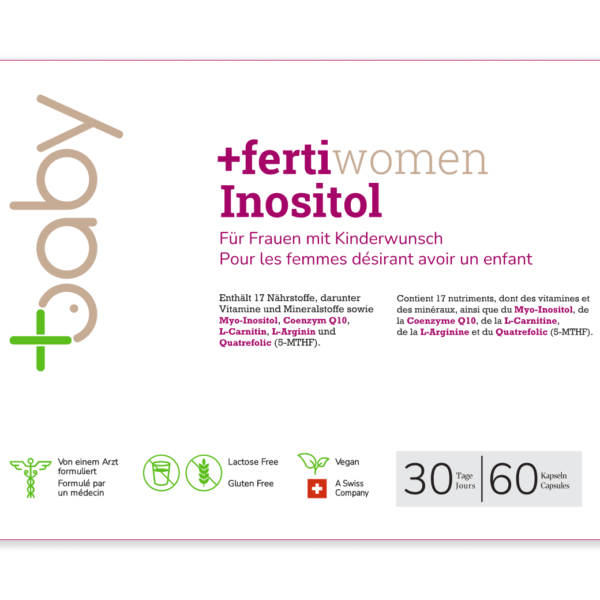
1. +fertiwomen Inositol: For Women Trying to Conceive
Supports ovulation, hormonal balance, and egg quality with Myo-Inositol, Quatrefolic®, CoQ10, and Vitamin D3. Ideal for women with PCOS or irregular cycles. 100% vegan.
→ Best for: Women trying to conceive, women with PCOS, women over 35.
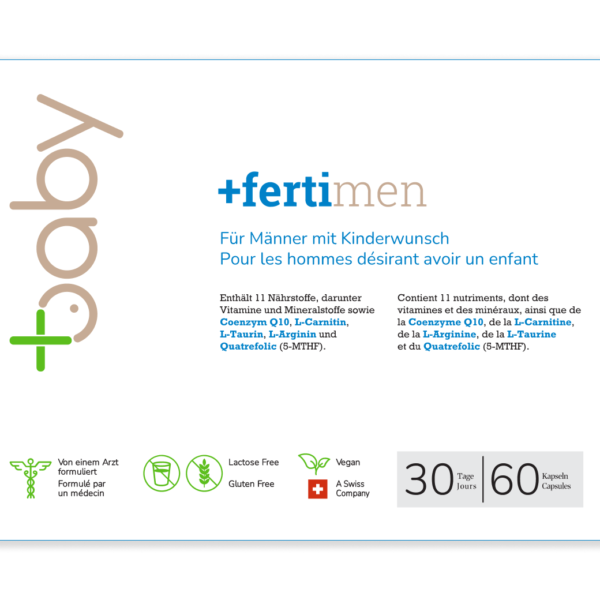
2. +fertimen: For Men’s Reproductive Health
Supports sperm count, motility, and DNA integrity with 11 key fertility nutrients, including Zinc, Selenium, L-Carnitine, and CoQ10. 100% vegan.
→ Best for: Men trying to conceive, men with low sperm count or motility concerns.
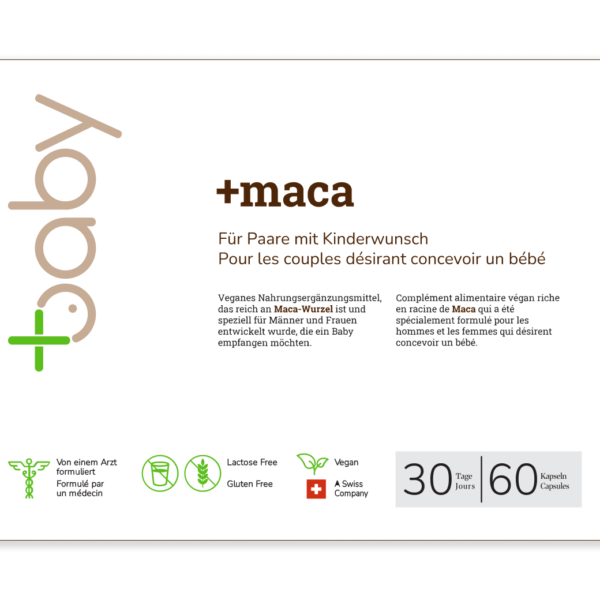
3. +maca: For Libido, Energy & Hormonal Balance
Organic Peruvian Maca that supports libido, energy, and hormonal balance in both men and women. 100% vegan and naturally sourced.
→ Best for: Both partners, especially when stress or low libido is a factor.
The strongest fertility strategy isn’t choosing between supplements and food, it’s combining the best foods for fertility with science-backed nutritional support to give your body the best possible start.
Many couples combine healthy eating with a structured fertility boost plan to support reproductive health from multiple angles.
Question: What is the best diet to get pregnant fast?
Answer: There is no single food that guarantees pregnancy, but a fertility diet focused on whole grains, leafy greens, healthy fats, and antioxidant-rich foods gives your body the best hormonal environment for conception. Start by adding more foods that boost fertility and cutting back on processed foods and alcohol.
Question: How long does it take for a diet to improve fertility?
Answer: For women, nutritional changes can start to affect egg quality within 3 months, as eggs take about 90 days to mature. For men, sperm renew every 74 days, so improvements from foods to improve sperm health can show in 10–12 weeks.
Question: Can eating certain foods help you ovulate?
Answer: Yes. Research shows that what to eat to get pregnant can directly impact ovulation. Plant-based iron, full-fat dairy, and Inositol have been linked to better ovulatory function — especially in women with PCOS or irregular cycles.
Question: Is a Mediterranean diet good for fertility?
Answer: Yes. The Mediterranean diet closely matches what research recommends for a diet for trying to conceive. Multiple studies support its positive impact on both egg quality and sperm parameters.
Question: What foods improve sperm count naturally?
Answer: A fertility diet for men focused on zinc (pumpkin seeds), lycopene (cooked tomatoes), selenium (sunflower seeds), and omega-3 (fatty fish) has been shown to support sperm count, motility, and morphology.
Sophie and Marc did not overhaul their lives overnight. They started with one extra portion of leafy greens, swapped their afternoon snack for berries and walnuts, and added oily fish twice a week. Small, consistent changes.
The science is clear: a thoughtful fertility diet is one of the most impactful steps you can take on your journey to conception. The foods to eat when trying to conceive are not exotic, they are real, nourishing ingredients that work.
As a Swiss Vegan Fertility Leader, Plusbaby is here to support every step of your journey, from your plate to your supplement routine. When you are ready to go beyond food, our doctor-formulated range is waiting for you.
Explore Plusbaby’s Doctor-Formulated Fertility Supplements
+fertiwomen Inositol · +fertimen · +maca · +mum
→ Visit plusbaby.ch/en/shop now!